
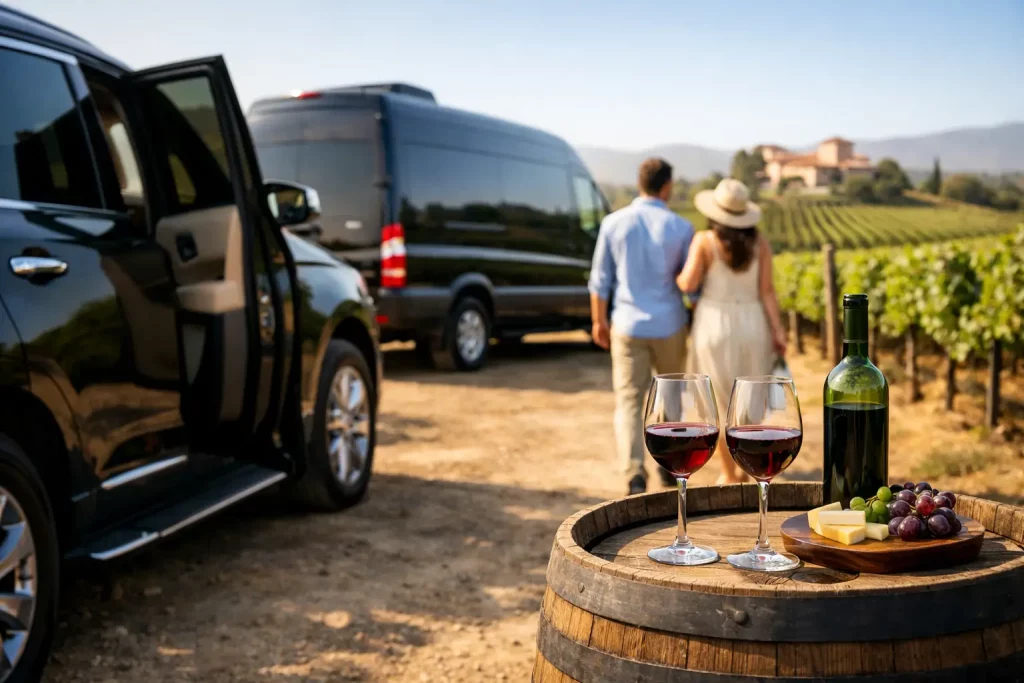
A wine country day can start to feel complicated before the first tasting is even booked. The right wine tour transportation changes that. Instead of assigning a driver, managing parking at each winery, and worrying about timing after lunch and pours, you can keep the day focused on the experience itself.
For Bay Area travelers heading to Napa or Sonoma, transportation is not a small detail. It sets the pace, affects comfort between stops, and often determines whether the day feels relaxed or rushed. That matters even more for couples celebrating, small groups coordinating multiple pickups, or visitors who want a polished plan from the moment they leave home or the hotel.
Why wine tour transportation matters more than most people expect
Wine tasting days have a rhythm of their own. You are not simply going from point A to point B. You may be leaving San Francisco in the morning, making the first tasting by late morning, stopping for lunch, adding an afternoon estate, and returning in the evening. If the transportation is poorly matched to the plan, every delay becomes more noticeable.
Comfort is one part of it. A premium vehicle gives guests space to settle in, talk, and enjoy the drive without feeling squeezed in for several hours. Reliability is another. Wine country appointments are often timed, and popular wineries do not always offer much flexibility if a party arrives late. Professional chauffeur service also adds a layer of safety and consistency that ride-hailing does not always provide for a full-day itinerary with multiple rural stops.
There is also a practical point that people often underestimate. Cell coverage can vary in certain areas, winery entrances are not always obvious, and pickup logistics can get messy when a group tries to coordinate separate cars. A managed service removes much of that friction.
How to choose wine tour transportation
The best choice depends on the shape of the day, not just the distance. A couple visiting two or three wineries has different needs than a family group celebrating a birthday or a small executive party entertaining clients.
Vehicle size should be the first decision. It sounds obvious, but many travelers choose based on passenger count alone and forget what the day actually includes. If guests are dressed up, bringing jackets, or expecting to ride for several hours, a tighter cabin can feel limiting quickly. A luxury sedan may be ideal for two people who want a quiet, refined ride. An SUV is often the better fit for groups that want easier entry, extra room, or luggage space if the trip begins from a hotel or airport.
Timing should come next. A good wine tour plan accounts for real driving time between properties, not just the tasting schedule on paper. Back-to-back reservations with no margin can create unnecessary pressure. The more premium the day, the less it should feel hurried. Building in a cushion between stops gives everyone room to enjoy tastings, browse a property, or simply take a little longer over lunch.
Service standards matter too. For a wine tour, professionalism is not only about a clean vehicle and a courteous driver. It is also about punctual arrival, route familiarity, and the ability to keep the day moving smoothly without becoming intrusive. Guests want attentive service, but they do not want to micromanage the transportation while they are trying to relax.
Matching the vehicle to the experience
A luxury sedan works well when the goal is privacy and a more intimate pace. Couples celebrating an anniversary or visitors planning a refined Napa day often prefer that atmosphere. The ride feels calm, the entry and exit at each winery is easy, and the overall tone stays elevated.
For three to six passengers, a premium SUV is usually the most versatile option. Vehicles in this category offer a stronger balance of comfort, visibility, and storage. They are especially useful for Bay Area pickups where guests may be joining from different homes, hotels, or business locations before heading north.
Larger groups should think carefully about comfort over the entire day, not just whether everyone technically fits. A wine tour can stretch across eight or more hours. Extra room becomes valuable fast, particularly after several stops. This is one of those cases where booking slightly above your minimum capacity often makes the day better.
The route can influence the choice as well. If the trip begins in San Francisco, Palo Alto, or San Jose, guests may spend a meaningful amount of time in the vehicle before the first tasting starts. That longer ride makes seat comfort, cabin quiet, and climate control more important than they might be for a short local transfer.
What a professional chauffeur service adds
People often compare wine tour transportation to simply booking a car for the day. The difference is in execution. A professional chauffeur service is not just a vehicle with someone behind the wheel. It is a managed experience built around timing, presentation, and guest comfort.
That starts with arrival. There is value in knowing the vehicle will be where it should be, on time, and ready for a full-day schedule. There is equal value in working with a service that understands traffic patterns leaving the Bay Area, knows the flow of Napa and Sonoma routes, and can adapt if a tasting runs long or lunch service is delayed.
Professional drivers also bring discretion. For many clients, especially executives, couples celebrating, or families hosting out-of-town guests, that matters. The service should feel attentive without adding noise to the day.
Commercial insurance and proper operating standards also deserve attention. This may not be the most glamorous part of booking, but it is one of the most important. When you are planning a premium outing, peace of mind is part of the product.
Planning around Napa and Sonoma realities
Wine country looks simple on a map. In practice, the day requires pacing. Distances between wineries can be longer than expected, and weekend traffic can shift the entire schedule. Popular tasting rooms may run right on time, while others can feel more flexible. That means transportation should support the itinerary rather than forcing it.
A smart plan usually keeps the number of stops realistic. Three wineries and a proper lunch often create a better experience than trying to squeeze in five tastings. More stops are not always more value. They can leave guests rushed, fatigued, and spending too much of the day getting in and out of the vehicle.
Pickup strategy matters too. If everyone is departing from one point, the day starts cleanly. If the group is spread across San Francisco, Oakland, or the Peninsula, it helps to organize the route before the reservation is finalized. Efficient pickup order saves time and preserves energy for the wineries, where people actually want to spend the day.
For travelers flying in, it can also make sense to begin the wine country trip directly from SFO or another Bay Area arrival point. That works especially well for visitors who want to avoid renting a car, navigating unfamiliar roads, or splitting the experience between separate transportation providers.
When premium transportation is worth it
Not every wine day needs the same level of service. If the plan is casual and local, priorities may be different. But when the day includes celebrations, business hospitality, first-time visitors, or a higher-end winery lineup, premium transportation usually earns its place quickly.
It reduces decision fatigue. No one has to volunteer as the driver. No one needs to calculate whether the next pickup will be accepted. No one is left waiting outside a property trying to explain exactly where the gate is. That convenience has real value, especially for guests who are trying to host others well.
It also supports the tone of the day. Luxury is not only about appearance. It is about removing friction. A well-kept vehicle, a punctual chauffeur, and a schedule that holds together create a more comfortable and polished experience from beginning to end.
For that reason, many travelers see wine tour transportation as part of the event itself, not an extra line item. The ride shapes the mood, protects the schedule, and gives guests space to enjoy where they are going.
If you are planning a wine country day, think beyond getting there and back. Choose transportation that fits the group, the route, and the standard of experience you actually want. The wineries should be memorable. The travel between them should feel just as easy.