
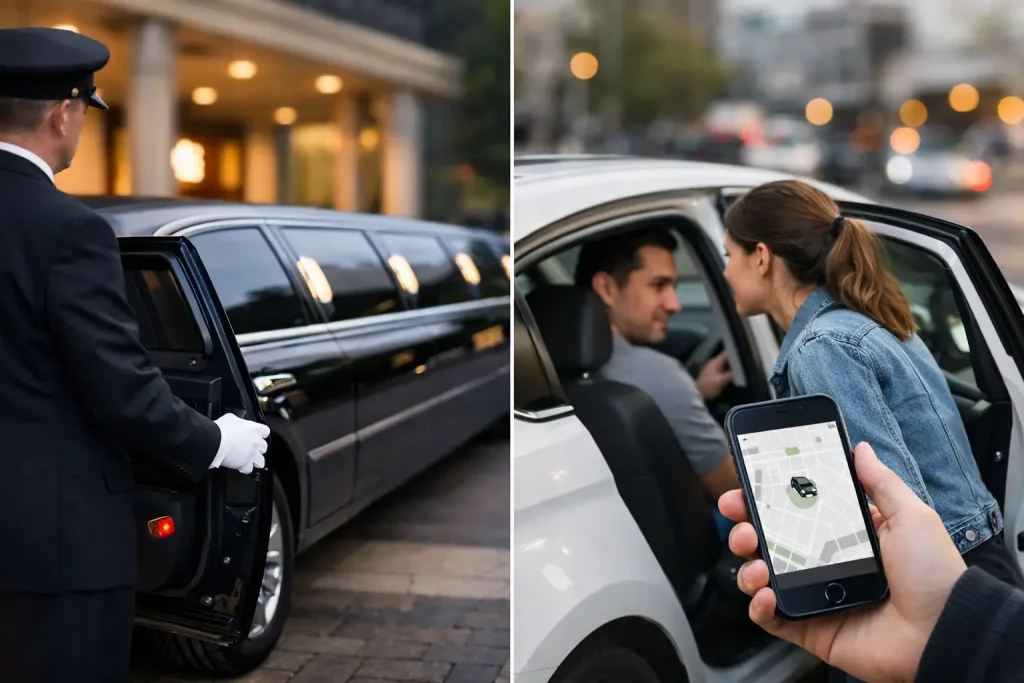
A late-night airport pickup, a corporate dinner downtown, a family ride after a concert – these are the moments when limo versus rideshare safety becomes more than a pricing question. It becomes a trust question. When timing matters, when luggage is involved, when children or older passengers are in the car, and when the pickup point is crowded or unfamiliar, the difference between a chauffeur service and an app-based ride is often found in the details most passengers never see.
For Bay Area travelers, those details matter. A professionally managed car service is built around advance planning, commercial standards, and accountability. A rideshare trip is built for speed and convenience. Both can get you from one point to another, but they do not operate under the same structure, and that affects safety in real ways.
What limo versus rideshare safety really means
Safety is not just about whether a driver follows traffic laws. It includes who hired the driver, how that driver was screened, what insurance is in place, whether the vehicle is commercially maintained, and what happens if something goes wrong.
With a limousine or chauffeur service, the ride is typically part of a managed transportation operation. The company dispatches the trip, assigns the vehicle, and stands behind the service. That usually means commercial licensing, commercial insurance, professional driver standards, and direct oversight.
With rideshare, the platform connects passengers with independent drivers using personal vehicles or vehicles operating under a more flexible arrangement. The convenience is clear. The trade-off is that the experience can vary widely from one ride to the next. Some rideshare drivers are excellent. Others may be new to the platform, unfamiliar with your route, or juggling inconsistent demand patterns that affect focus and punctuality.
Driver screening and professional standards
One of the clearest differences in limo versus rideshare safety is the role of the driver.
A professional chauffeur is hired to represent a transportation company. That usually comes with higher expectations for appearance, conduct, route knowledge, customer care, and vehicle handling. For executive travel, airport pickups, and event transportation, this level of professionalism is part of the service itself, not an added bonus.
Rideshare drivers, by contrast, are typically approved through a platform process designed to support scale. That process can include background screening, but the model is still based on a large, rotating pool of drivers with different levels of experience. The result is less consistency. You may get someone highly skilled, or you may get someone who relies entirely on an app for navigation and has limited experience with complex pickups.
For passengers, especially those booking transportation for clients, family members, or out-of-town guests, consistency matters as much as credentials. A chauffeur service is designed to reduce variables before the ride even begins.
Insurance is not a small detail
Passengers often assume all paid transportation is insured in the same way. It is not.
Commercial chauffeur services generally operate with commercial insurance designed for passenger transportation. That matters because the vehicle is being used specifically for business, and the policy structure reflects that use. It is part of the service model, not a temporary layer activated under certain app conditions.
Rideshare insurance can be more complicated. Coverage often depends on the driver’s status in the app at the time of an incident – waiting for a request, driving to a pickup, or transporting a passenger. The platform may provide coverage, but the structure is different from a dedicated commercial transportation business.
For many travelers, this is the point where the decision becomes clearer. If you are arranging an airport transfer at SFO, transporting executives between meetings in Palo Alto and San Francisco, or booking a family ride after an evening event, knowing the vehicle is operating under a clear commercial framework adds peace of mind.
Vehicle condition, maintenance, and presentation
Safety is also tied to vehicle quality and maintenance discipline.
In a limo or black car service, the fleet is part of the company brand. Vehicles are selected for passenger comfort, luggage capacity, and service reliability. They are expected to arrive clean, properly maintained, and appropriate for the booking. That is especially important for airport transportation, business travel, and special events where delays or vehicle issues can disrupt an entire schedule.
Rideshare vehicles can range from very good to very tired. Because the model depends on individual drivers using their own cars, the passenger experience is inherently less uniform. A rideshare vehicle may be perfectly fine for a short daytime trip across town. It may feel less reassuring for a 4:30 a.m. airport departure, a child-in-seat family transfer, or a late-night pickup in a crowded area.
This is where premium transportation earns its place. The point is not just leather seats or a quiet cabin. The point is knowing the vehicle was chosen and maintained for professional service.
Pickup control and situational safety
The most stressful part of a ride is often not the drive. It is the pickup.
Busy airports, hotel entrances, event venues, and downtown streets create confusion. Passengers may be tired, distracted, carrying bags, or traveling with children. In these moments, pickup coordination becomes a safety issue.
A chauffeur service typically offers clearer pickup planning, direct communication, and a known vehicle assignment. If the company has airport operating experience, that can include flight tracking and an understanding of where professional pickups should happen. That reduces the chance of wandering through crowded curbsides trying to match a license plate to an app notification.
With rideshare, the pickup experience can be less controlled. Drivers may circle, stop in awkward areas, or call asking the passenger to walk to a different location. Again, sometimes that works just fine. Sometimes it creates confusion at the exact moment when a traveler wants less of it.
When rideshare can still be a reasonable option
A balanced view matters here. Rideshare is not inherently unsafe, and for many people it is a practical choice.
If you need a quick trip in the middle of the day, are traveling alone, know the area well, and have flexibility around timing, rideshare may be perfectly acceptable. It is widely available, easy to request, and often suitable for casual point-to-point transportation.
The question is not whether rideshare should ever be used. The question is when a higher standard of service and oversight becomes worth it. For airport runs, executive itineraries, elderly passengers, important clients, event exits, and any ride where delay or uncertainty has a real cost, the answer is often a professional chauffeur service.
The hidden safety factor: reliability
Reliability does not always get labeled as safety, but it should.
A driver who arrives late can force rushed decisions. A last-minute cancellation can leave a traveler stranded in a parking lot or outside a terminal. A vehicle with limited trunk space can lead to uncomfortable seating or baggage issues. These problems sound operational, yet they can affect passenger security and stress in very real ways.
That is why premium transportation companies focus so heavily on dispatch, timing, and vehicle matching. If a group needs space for luggage on an airport transfer, the right SUV should be assigned. If an executive is heading to a meeting, the ride should arrive when promised, not within a loose window shaped by surge demand and driver availability.
In that sense, limo versus rideshare safety is also about predictability. The fewer moving parts a passenger has to manage, the safer and calmer the ride tends to feel.
Who benefits most from a chauffeur service
Not every trip requires the same level of planning, but certain travelers consistently benefit from booked car service. Families appreciate the extra room, smoother coordination, and reduced curbside confusion. Business travelers value punctuality, discretion, and a polished arrival. Couples and private groups want a more controlled experience for evenings out, wine country visits, and special events.
This is especially true in places where transportation can get complicated quickly. In the Bay Area, airport traffic, event congestion, and long regional transfers can turn a simple ride into a logistics issue. A managed service helps remove those friction points before they become passenger problems.
Companies like Shalom USA Limo Company are built around that expectation – not just getting you there, but doing it with clear standards, professional accountability, and the kind of timing that supports the rest of your day.
Choosing based on the ride, not just the rate
Price will always be part of the decision. That is fair. But safety decisions are rarely best made on price alone.
The better question is what the ride needs to do. If the trip is casual, flexible, and low stakes, rideshare may be enough. If the trip involves airport timing, client impressions, family comfort, late-night travel, or any situation where uncertainty creates risk, professional car service usually offers the stronger safety profile.
That does not mean luxury for luxury’s sake. It means choosing a transportation model with more oversight, more accountability, and fewer unknowns.
The most reassuring ride is often the one that feels uneventful from start to finish – the car arrives as expected, the driver knows exactly where to go, the vehicle is clean and prepared, and you never have to wonder who is responsible for your trip.