
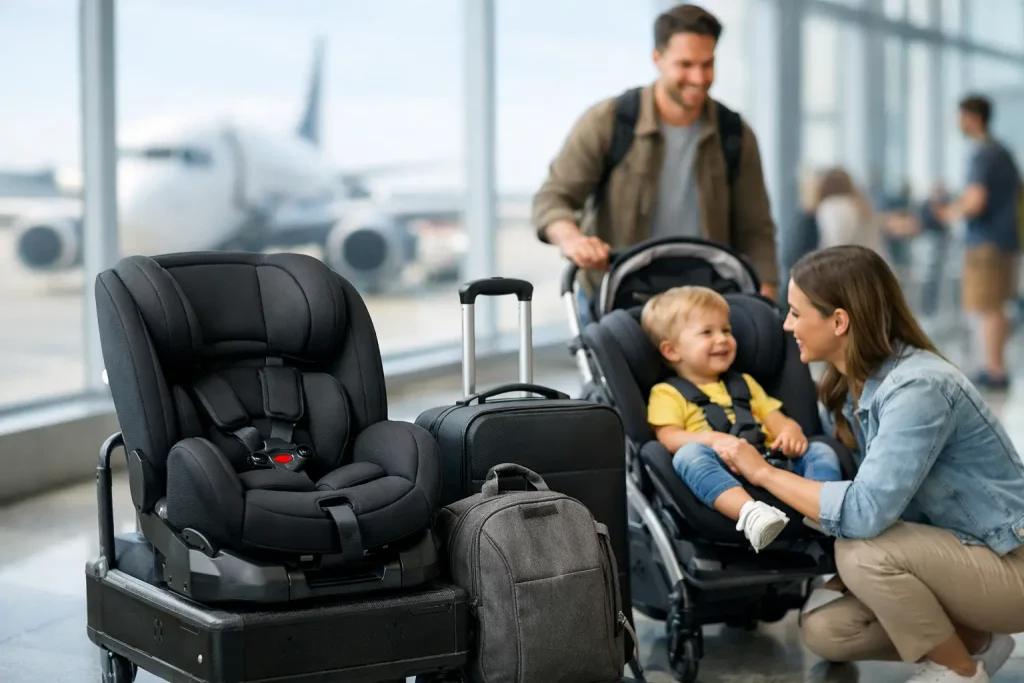
A late arrival at SFO is not the time to discover that the car seat you requested does not fit your child, your luggage, or the vehicle. Airport car seats for families should be handled as part of the reservation, not as a last-minute add-on. When the right seat, vehicle, and pickup details are confirmed in advance, the ride from the terminal can feel calm from the first curbside moment.
For families traveling through San Francisco, the practical goal is simple: a properly equipped vehicle, adequate room for everyone and every bag, and a professional driver who is ready when the flight arrives. Luxury matters, but it works best when it is paired with clear planning and a safety-first approach.
Why airport car seats for families need advance planning
A child seat is not one-size-fits-all. Infants generally need a rear-facing seat, toddlers may need a convertible seat, and older children may require a forward-facing seat or booster. The appropriate choice depends on a child’s age, height, weight, and the seat manufacturer’s limits. California child passenger rules also apply, so families should confirm current requirements before travel rather than relying on assumptions made for a previous trip.
A reservation request that simply says “car seat needed” leaves too much room for error. A well-managed car service reservation identifies the number of children, each child’s approximate age and size, the seat type requested, and whether a parent will bring a personal seat. That information allows the transportation provider to assign an appropriate vehicle and prepare for the installation setup before the driver arrives.
This is particularly valuable after a long flight. Parents should not have to negotiate a seat arrangement at the curb while one child is overtired and another is standing near busy airport traffic. A confirmed plan turns an airport transfer into the quiet, organized beginning of the next part of the trip.
What to provide when booking a family airport transfer
The best family reservations are specific. Share your flight number, arrival airline, travel date, pickup time, passenger count, and destination. Flight tracking is especially helpful at SFO, where delays, early arrivals, and long walks from the gate can affect the timing of a pickup.
For each child, provide the information the car service needs to match the request appropriately: age, approximate weight and height, and whether the child needs rear-facing, forward-facing, or booster seating. If you are bringing your own seat, say so early. That may change the vehicle recommendation, especially when there are multiple children, large suitcases, a stroller, or golf bags.
It is also worth confirming how many seats can be accommodated in the vehicle while preserving comfortable passenger space. Three child seats across a rear bench can be possible in some vehicles but not others. A premium SUV may be the better choice for a family of five with luggage, while a larger party with several child seats may need a vehicle configured for additional seating and cargo capacity.
Choose the vehicle around seats and luggage
Families often focus on the number of passenger seats and overlook the space occupied by child restraints. The result can be a technically available ride that feels cramped once the seats are installed. The smarter approach is to select the vehicle based on the complete travel party: adults, children, child seats, carry-ons, checked bags, strollers, and any special equipment.
For a couple traveling with one child and a modest amount of luggage, a luxury sedan or midsize luxury SUV may offer an elegant, comfortable solution. For two adults, two or three children, car seats, and airport bags, a full-size SUV such as a Cadillac Escalade or Lincoln Navigator generally offers more useful flexibility. The extra room is not simply a luxury feature. It gives families space to load bags securely, keep children comfortable, and avoid placing items where they interfere with access to the seats.
There are trade-offs. A larger vehicle provides easier loading and more personal space, but it may be unnecessary for a small party traveling light. Conversely, choosing the smallest option to save space on paper can make the first hour of a family trip needlessly difficult. A knowledgeable reservation team should be able to recommend a vehicle based on the real configuration, not just the passenger total.
Bring your own seat or request one?
Bringing a familiar car seat can offer reassurance, particularly for infants and young toddlers who use a specific model every day. Parents know its history, fit, and manufacturer instructions. If that seat is approved for air travel and has the appropriate labeling, it may also be useful on the plane. The downside is the added equipment to carry through the airport and manage after landing.
Requesting a seat from a chauffeur service can reduce the amount of gear a family brings through the terminal. It can be an excellent option when the provider confirms the seat category in advance and has a clear process for preparing it. Ask whether the seat is available in the required orientation, whether it is appropriate for your child’s measurements, and whether the vehicle has been selected with that seat setup in mind.
In either case, parents should review the seat’s installation and harness fit before departure. Confirm that the harness is positioned and tightened according to the manufacturer’s instructions, and that the child is within the seat’s stated limits. A professional driver can provide an attentive, unhurried pickup, but no one should rush past the final safety check.
Plan for the airport pickup, not just the drive
The airport pickup experience is where a private car service differs most from an uncertain curbside ride. Families benefit from a clear meeting plan: where to meet, how the driver will identify the party, what happens if bags are delayed, and how flight changes are monitored. When traveling with children, even a five-minute wait can feel much longer without that clarity.
At SFO, travelers may be dealing with terminal changes, baggage claim delays, and a full luggage cart. A reserved, commercially insured, airport-permitted service offers a more controlled alternative to trying to locate a suitable ride after landing. The driver can be assigned with the family’s seat and vehicle needs already documented, rather than making a best guess in a busy pickup zone.
For departures, allow extra time for car-seat installation, loading, and unexpected family logistics. A chauffeur arriving a few minutes early is useful, not excessive, when a stroller needs folding or a child decides they need a snack just as the bags are ready. Punctuality is not only about reaching the airport on time. It is about giving the family enough margin to travel without pressure.
Questions worth asking before you confirm
Before finalizing a reservation, ask whether the requested child restraint type is confirmed, not merely noted as a preference. Confirm the selected vehicle, passenger capacity with the seats installed, and luggage capacity. Ask for the pickup procedure and whether flight tracking is included for arriving flights.
Also confirm the age and size information the provider needs, any charge associated with requested seats, and the cancellation or change policy if travel plans shift. These are not overly detailed questions. They are the details that prevent a polished airport transfer from becoming a stressful one.
A premium family transfer should feel considered from reservation to arrival. Shalom USA Limo Company approaches airport travel with that expectation: the right vehicle, attentive chauffeur service, and timing built around the flight rather than a generic pickup window.
The best airport ride for a family is rarely the one booked fastest. It is the one that accounts for the smallest passenger in the vehicle before the plane touches down, leaving everyone free to settle in, breathe out, and enjoy the ride ahead.