
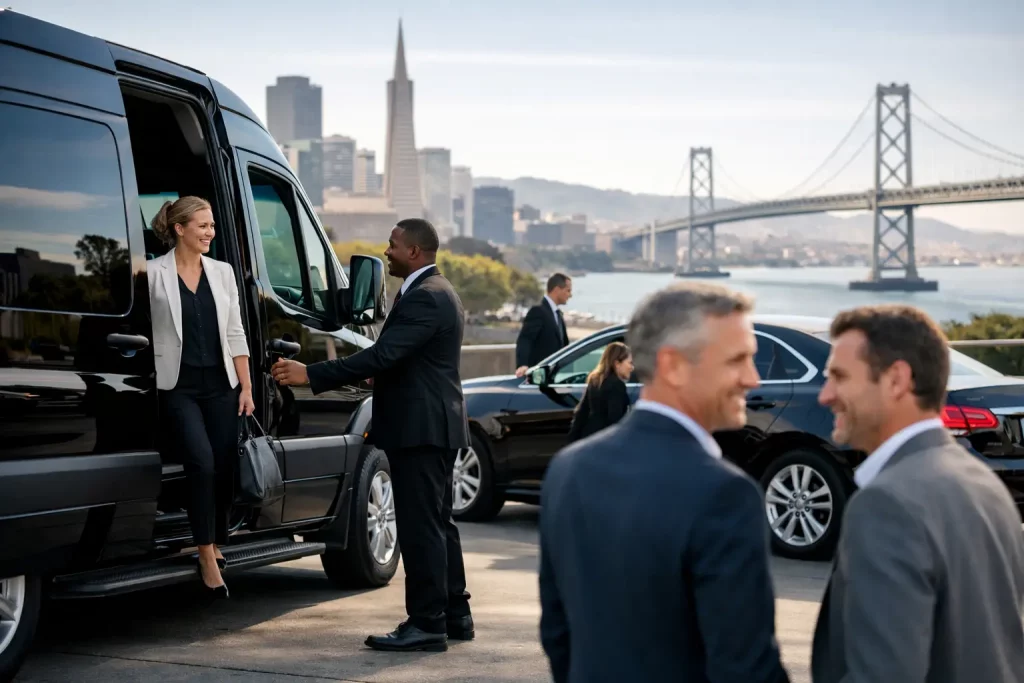
A late executive arrival can change the tone of an entire client dinner, board meeting, or conference program. Corporate event transportation Bay Area planners arrange should do more than get guests from one address to another. It should protect the schedule, give attendees a comfortable place to reset between commitments, and reflect the level of care behind the event.
That matters in a region where traffic patterns can change quickly between San Francisco, Silicon Valley, Oakland, and the Peninsula. A polished transportation plan gives organizers one less moving part to manage when the day is already full of them.
Start With the Event Schedule, Not the Vehicle
The right vehicle is important, but the itinerary should come first. Begin with every pickup point, arrival deadline, event address, planned departure, and final drop-off location. Then account for the parts of the schedule that are less obvious: hotel check-in, security at a venue, luggage retrieval, a reception that runs long, or guests arriving on different flights.
For executive travel, a 15-minute buffer is often reasonable. For airport arrivals before a time-sensitive presentation or a large meeting, more time is usually the better choice. The Bay Area’s distance on a map can be misleading. A route between SFO and downtown San Francisco may be straightforward at one hour and far less predictable at another. The same is true for trips between Palo Alto, San Jose, and a meeting venue in the city.
A professional chauffeur service can build the plan around real arrival windows rather than a single optimistic drive-time estimate. This is especially valuable when event guests are unfamiliar with the area or have been traveling all day.
Choose Transportation by Passenger Experience
Corporate guests do not all travel the same way. One senior executive may need a quiet, private ride from the airport. A small leadership team may prefer to travel together, review notes, and arrive at the venue as a group. A family attending a company celebration may need more passenger room and luggage capacity.
For a single executive or couple, a premium sedan such as a BMW 7 Series can provide a refined, discreet setting. Luxury SUVs, including a Cadillac Escalade, Lincoln Navigator, Cadillac XT6, or Mercedes EQ 450+, are often a better fit for small groups, travelers with substantial luggage, or guests who value extra space. The best choice depends on guest count, luggage, route length, and the impression the occasion calls for.
Do not automatically book the largest vehicle available. An oversized vehicle for one passenger can feel unnecessary, while an undersized vehicle can create an uncomfortable beginning to the day. Matching the vehicle to the guest experience is a practical detail that people notice.
Build a Clear Transportation Manifest
A transportation manifest is the operational document that prevents last-minute calls and unclear handoffs. It does not need to be complicated, but it should be current and shared with the people responsible for the event.
For each ride, include the guest name, mobile number if appropriate, pickup address, pickup time, destination, flight details when applicable, vehicle assignment, and a designated event contact. Note special requirements as well, such as extra luggage, a preferred pickup entrance, a mobility consideration, or whether the passenger should be met inside the terminal.
For larger programs, group passengers by purpose rather than simply by hotel. For example, speakers may need their own arrival plan, while attendees can use scheduled transfers from the hotel. This approach protects the people whose timing directly affects the program without overcomplicating transportation for everyone else.
Details change. A useful manifest also identifies who has the authority to approve changes on event day. Without that clarity, a chauffeur may receive conflicting requests from guests, hotel staff, and organizers.
Plan Airport Service Around Real Arrival Conditions
Airport transportation is one of the most visible parts of a corporate guest’s experience. A delayed flight, a changed terminal, or a guest delayed at baggage claim can quickly disrupt a fixed pickup arrangement. Flight tracking and airport-permitted service help reduce that uncertainty.
For arrivals at SFO, confirm whether guests want curbside pickup or a more guided meeting arrangement. Curbside service may be efficient for an experienced traveler carrying little luggage. A meet-and-greet style pickup can be more comfortable for a first-time visitor, an international guest, or a senior leader arriving after a long flight.
It is also wise to separate airport arrivals from group hotel transfers when schedules are tight. One delayed flight should not leave an entire group waiting. Individual airport service gives each executive a more reliable arrival experience, while coordinated shuttles or SUVs can handle planned group movements later in the day.
Account for the Bay Area’s Event-Day Variables
Traffic is only one consideration. Venue access, street closures, sporting events, conventions, and hotel loading zones can all affect the final few minutes of a trip. A chauffeur who knows the local area can select a practical approach route and identify where guests can enter with minimal walking and confusion.
Ask the venue about its preferred transportation entrance well before the event. Some downtown properties have a narrow loading area. Others require advance information for security teams or have restrictions on vehicle staging. If the event includes a dinner in San Francisco followed by hotel returns, determine whether the group will leave all at once or in waves. Staggered departures often call for a dedicated transportation window rather than one scheduled pickup time.
For offsite meetings in Napa Valley or Sonoma County, travel time deserves special attention. A longer route can be an excellent opportunity for guests to relax or prepare, but it needs an itinerary that allows for comfort stops, meals, and a reasonable return time.
Decide When Dedicated Service Is Worth It
A point-to-point reservation works well for a simple airport transfer or a defined trip between a hotel and meeting. Dedicated hourly service can be the stronger choice when the schedule is fluid. It gives organizers flexibility for added stops, changed departure times, and an executive who needs to move between several locations.
This is not always the most economical option, and it is not necessary for every event. For a two-hour client lunch with a confirmed agenda, scheduled transfers may be sufficient. For an investor roadshow, a multi-venue executive meeting, or a conference where leaders may depart at different times, a dedicated vehicle and chauffeur can prevent unnecessary delays.
The decision comes down to the cost of uncertainty. When a missed arrival would affect a presentation, partnership discussion, or guest relationship, dedicated service is often the more sensible investment.
Give Guests Simple, Confident Instructions
Guests should not have to guess where to go or whom to contact. A short transportation message sent before travel can set the right expectations. Include the chauffeur service name, pickup time, vehicle description, meeting location, and the event contact for urgent questions.
Keep the message polished and brief. Avoid sending guests a long operational document full of details they do not need. Their job is simply to know where to be, when to be there, and how to recognize their ride.
For high-priority guests, a personal confirmation from the event coordinator can add reassurance. This is particularly helpful for international travelers, speakers, board members, and executives on compressed schedules.
Work With a Chauffeur Partner That Understands the Stakes
Corporate transportation is a hospitality service with operational consequences. The right provider should offer professionally maintained luxury vehicles, commercially insured service, experienced chauffeurs, and clear communication before and during the event. Punctuality should be built into the service standard, not treated as a hopeful outcome.
Shalom USA Limo Company supports corporate travel across the Bay Area with premium sedans and SUVs selected for executive comfort, small-group travel, and airport service. The focus is straightforward: luxury, safety, and on-time execution when your guests have somewhere important to be.
A well-planned ride rarely becomes the center of attention, and that is exactly the point. When guests arrive calm, on time, and ready for the room, transportation has done its job well.