
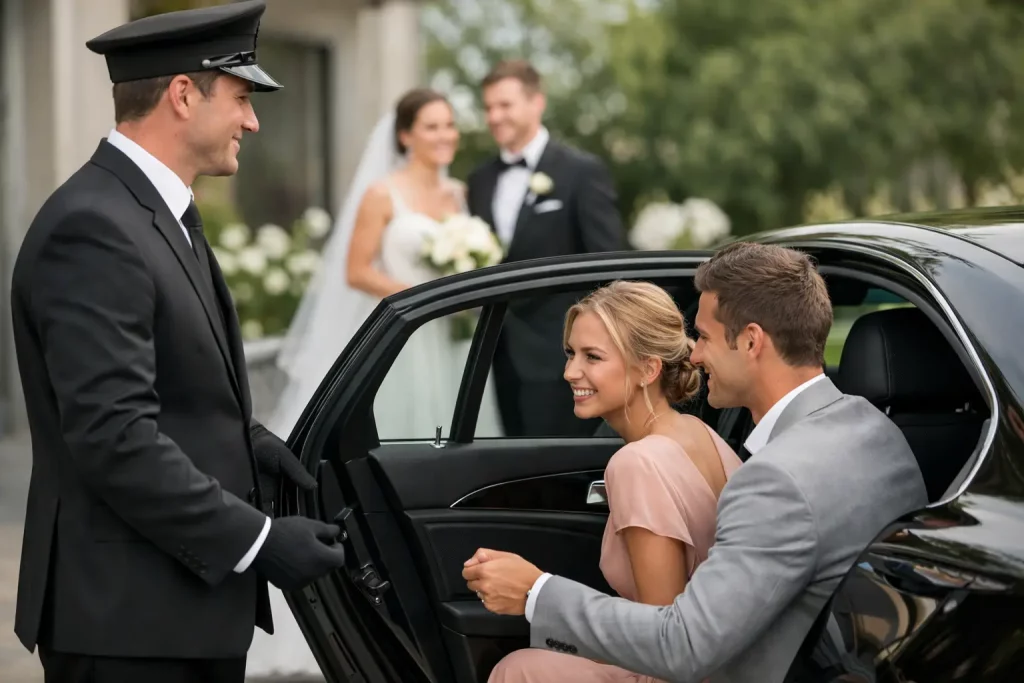
A wedding day can run beautifully until 18 guests are waiting outside a hotel, the ceremony starts in 20 minutes, and no one is sure which car is coming. A chauffeur service for wedding guests turns that vulnerable part of the day into a managed plan: confirmed pickups, the right vehicle for each party, and a professional driver focused on timing rather than guesswork.
For couples hosting family, friends, or out-of-town guests in the Bay Area, transportation is not just a nice gesture. It protects the schedule, reduces parking pressure, and lets guests arrive relaxed enough to enjoy the occasion. The best plan is rarely about putting every guest in a luxury vehicle. It is about identifying the rides that matter most and arranging them with care.
Why a chauffeur service for wedding guests matters
Wedding transportation has more moving parts than a typical special-event ride. Guests may be arriving from SFO, checking into different hotels, attending a rehearsal dinner, traveling to a venue with limited parking, and leaving at different times after the reception. If each person is left to arrange an app-based ride, the couple or wedding party often becomes the default transportation help desk.
A dedicated chauffeur service gives the group a clear point of coordination. Drivers work from an agreed itinerary, pickup instructions are shared before the event, and the vehicle is reserved for the guests rather than subject to last-minute availability. That difference matters when a ceremony has a firm start time or when a reception venue requires guests to depart by a certain hour.
There is also a hospitality benefit. Older relatives, guests traveling with children, and visitors unfamiliar with San Francisco, Napa Valley, or the Peninsula may appreciate not having to navigate unfamiliar roads, parking garages, or late-night pickup zones. A polished vehicle and a courteous chauffeur set the tone before guests even reach the venue.
Start with the guest movements that carry the most risk
Not every wedding guest needs chauffeured transportation. For a smaller local wedding with abundant venue parking, a few well-planned rides may be more useful than a full transportation program. The right scope depends on the guest list, venue access, hotel locations, and the schedule.
Begin by mapping the moments when a delayed, missed, or uncomfortable ride would have the greatest effect. Airport arrivals for immediate family, transportation for grandparents, hotel-to-venue group departures, and late-night returns are usually high priorities. If the wedding includes a winery, estate, hillside property, or destination venue, transportation becomes even more valuable because driving conditions and distance can limit guests’ options.
Hotel pickups should be simple and specific
A hotel pickup works best when guests receive one clear instruction: where to wait, what time to be there, and who to contact if they need help. Large hotels can have multiple entrances, busy porte-cocheres, and event traffic that changes throughout the day. Naming the exact pickup point prevents unnecessary calls and helps the chauffeur position the vehicle efficiently.
Allow time for guests who are dressing, gathering personal items, or traveling with mobility equipment. A vehicle may be ready precisely on time, but the departure plan still needs a realistic buffer. For weddings, arriving 15 to 20 minutes early is usually far better than building a plan that depends on every person being ready at the exact minute.
Separate ceremony arrivals from reception departures
The most effective transportation schedules often use different plans for different parts of the celebration. Guests traveling to the ceremony may need grouped departures from a hotel. At the end of the reception, some guests may leave early, while others want to stay until the final toast.
For that reason, a continuous hourly charter can make sense for certain groups, particularly VIP family members or guests who need flexibility. Point-to-point transportation may be the better value for a straightforward hotel transfer. A professional transportation provider can help determine which approach fits the actual itinerary instead of selling more vehicle time than the event requires.
Choose the vehicle around the people, not the photo
A wedding transportation plan should look refined, but passenger comfort and practical capacity come first. A couple traveling with a small amount of luggage may prefer the quiet sophistication of a BMW 7 Series or Mercedes EQ 450+. A family group, older guests, or passengers carrying formalwear, gifts, and personal items may be better served by a Cadillac Escalade or Lincoln Navigator.
The passenger count alone does not tell the whole story. Consider dress volume, luggage, child seats, walkers, and whether guests need easy entry and exit. A vehicle that technically seats the group can still feel crowded when people are in formal attire. For airport pickups, luggage space deserves the same attention as seating capacity.
If the wedding party needs transportation, keep their movements separate from guest transportation whenever possible. Bridesmaids, groomsmen, photographers, and family members often operate on a tighter schedule than invited guests. Combining those groups can create avoidable delays and makes the day harder to manage.
Build a timeline that accounts for real Bay Area conditions
The Bay Area rewards careful timing. Traffic around San Francisco, SFO, Oakland, San Jose, and major Peninsula corridors can shift quickly. Weekend events, bridge traffic, sporting events, and construction can also affect travel times. A professional chauffeur monitors the route, but the itinerary must still provide enough room for real-world conditions.
When booking, provide the complete picture: hotel name, venue address, ceremony time, reception end time, expected guest count, and any planned photo stops. If a venue has a narrow driveway, a gated entrance, or a designated commercial drop-off location, share that detail early. Good planning prevents a driver from arriving on time but being unable to reach the correct entrance.
For airport guests, flight tracking and airport-permitted service add meaningful reassurance. A delayed flight should not force a family member to scramble for transportation after landing. Confirm whether guests need meet-and-greet assistance, curbside pickup, or time to collect checked baggage before the chauffeur is dispatched to the pickup area.
Give guests communication they can actually use
Transportation details are most helpful when they are brief. A long message with every contingency often goes unread. Send guests the pickup time, exact location, chauffeur service contact information, and a reminder to be ready a few minutes early. If several rides are scheduled, label each one clearly by hotel, destination, and departure time.
For international guests or relatives who do not use rideshare apps, this clarity is especially valuable. They do not need to download anything, estimate fares, or explain a destination to an unfamiliar driver. They simply follow the plan provided by the couple or coordinator.
It is also wise to identify one transportation contact who is not the bride or groom. This may be a wedding planner, a trusted family member, or a member of the wedding party. If a guest has a question on the day, that person can coordinate with the chauffeur team without interrupting the couple during photos, vows, or the reception.
What to confirm before reserving wedding guest transportation
Premium transportation should come with clear expectations, not vague promises. Ask whether the company carries commercial insurance, whether chauffeurs are professionally trained, and how itinerary changes are handled. Confirm vehicle type, passenger and luggage capacity, pickup procedures, waiting time, and whether gratuity, tolls, or airport fees are included in the quoted rate.
Ask how the provider handles a delayed guest, an early departure, or an address change. No transportation plan can eliminate every surprise, but a responsive dispatch process and an experienced chauffeur team can prevent a small adjustment from becoming a major disruption.
Shalom USA Limo Company approaches wedding transportation with the same priorities that matter for executive and airport travel: luxury, safety, and being on time. That means matching the vehicle and service format to the guests’ actual needs, whether that is a quiet airport arrival for close family or coordinated transportation between a San Francisco hotel and a celebration venue.
A thoughtful ride plan gives your guests one less decision to make on a day already full of emotion, schedules, and celebration. When the last guest steps out comfortably, on time, and ready to be present, the transportation has done exactly what it should.